Yoga for the Nervous System: A Simple 15-Minute Downshift
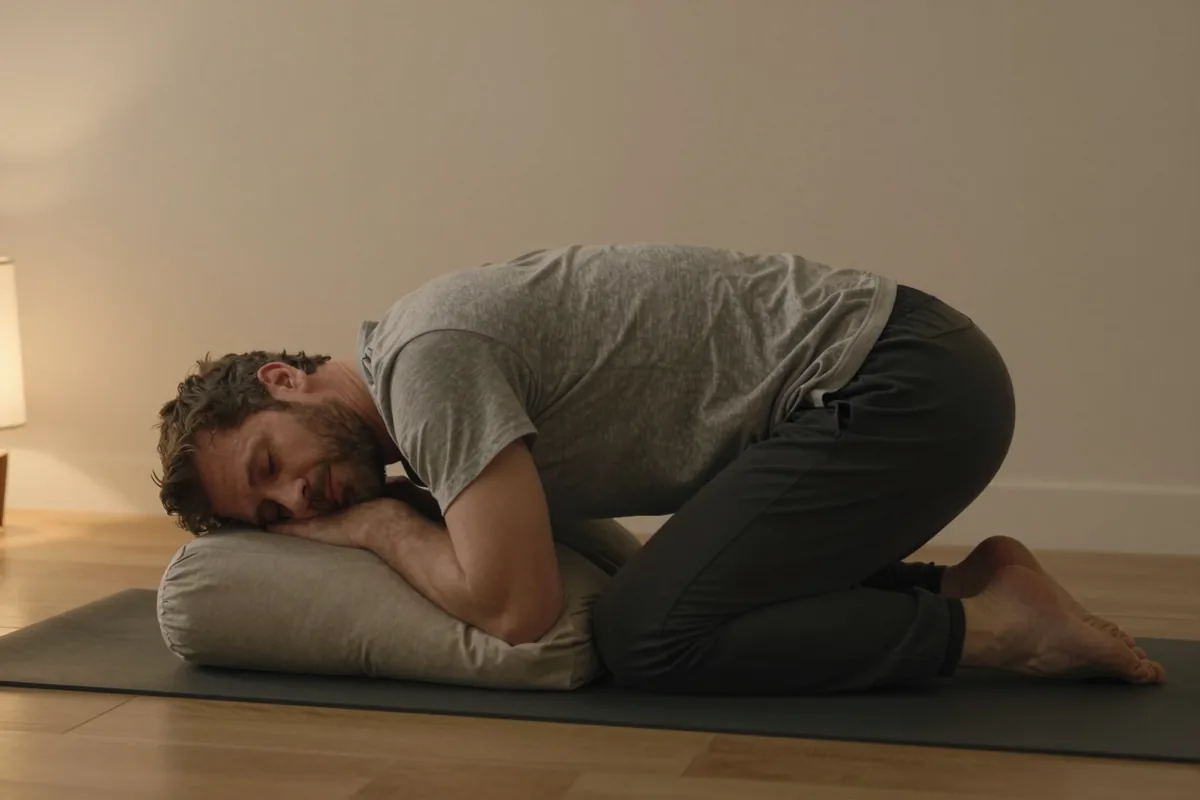
Everyone online wants you to “regulate your nervous system” right now. Yoga for the nervous system is a real thing, but it’s simpler and less magical than your feed makes it sound. Here’s what it means, what yoga can honestly do, and a 15-minute practice you can use tonight.
What People Mean by Nervous System Regulation
Your autonomic nervous system runs the stuff you don’t think about, like heart rate and digestion. It has two main branches that work kind of like a gas pedal and a brake.
- Sympathetic: the gas pedal, or “fight or flight.” Heart rate goes up, breathing gets faster, muscles get ready to move. Useful when a car swerves at you. Less useful during a tense email thread.
- Parasympathetic: the brake. People call it “rest and digest.” Heart rate slows, digestion gets going again, the body recovers.
You need both. The goal was never to live on the brake. A healthy system moves between the two and comes back down after a stressful moment.
So when people say “regulation,” they usually mean getting back down. If you’ve ever felt wired at 11pm after a stressful day, that’s it. The stress is over, but your body hasn’t gotten the memo.
What Yoga for the Nervous System Can Actually Do
Honestly, yoga doesn’t do anything mysterious here. It gives you a few tools that tend to nudge your body toward the brake. Three of them matter most.
Slow breathing with a longer exhale. Your heart rate naturally speeds up a little when you breathe in and slows down a little when you breathe out. Make the exhale longer and slower, and you lean into the slowing side. This is the most practical tool in the whole post.
Supported poses. When the floor, a bolster or a wall holds your weight, your muscles can stop bracing. A body that isn’t bracing tends to read the situation as safe. That’s the idea behind restorative yoga, and it’s why props show up so much in this practice.
Attention. Stress loves to pull you into the future. Paying attention to your breath or the feeling of your back on the floor brings you into the present for a few minutes. That’s not a cure for anything. It’s a break, and breaks help.
That’s it. No secret pose.
Where the Hype Gets It Wrong
The vagus nerve has become the celebrity of wellness content. It’s a real and important nerve. It carries a lot of parasympathetic signals between your brain and your organs. But some of what you see online goes way past what we know.
- “Hack your vagus nerve” claims are mostly overstated. You can’t flip it on like a switch with one trick. Slow breathing likely influences vagal activity, but the effects are modest and they vary from person to person.
- Popular theories are often taught as settled fact. Some frameworks you’ll see on social media, polyvagal theory being the big one, are debated among researchers. They can be a helpful way to talk about how stress feels. They’re not proven science just because an influencer said so with confidence.
- “Regulated” doesn’t mean calm all the time. Feeling stressed before a hard conversation is normal. A working nervous system reacts. The point is recovering afterwards, not never reacting.
- Breathing is not a treatment. If you’re dealing with ongoing anxiety, panic attacks, trauma or depression, a breathing practice can sit alongside proper care. It doesn’t replace it.
I mean, it’s a little funny. The real advice (“breathe slowly, lie down, rest a bit”) is so plain that it had to get rebranded to go viral.
Before You Start
You’ll need a mat or a rug, a wall, a firm cushion or bolster (a rolled-up blanket works), and something to put under your head. Put your phone on do not disturb. That alone does half the work.
Check with your doctor first if you’re pregnant, have high or low blood pressure, glaucoma, a recent injury or surgery, or a heart or lung condition. And if any breathing pattern makes you dizzy or more anxious, go back to normal breathing. That’s not failing. That’s paying attention.
The 15-Minute Downshift Practice
Move slowly. Every pose here should feel easy. If you’re working hard, add a prop or back off. The times are rough guides, not rules.
Longer Exhale Breathing
About 3 minutes. Sit comfortably or lie on your back with your knees bent.
- Breathe in through your nose for a count of about 4.
- Breathe out through your nose or softly through pursed lips for a count of about 6.
- No forcing. If 4 and 6 feel like a lot, try 3 and 5. The exhale just needs to be a bit longer than the inhale.
- Let your belly move. If your shoulders are rising on every inhale, put a hand on your stomach and breathe into the hand.
Keep this breathing going, loosely, through the rest of the practice. If you want more breathing options, our beginner’s guide to yoga breathing for relaxation covers a few others.
Supported Child’s Pose
About 2 minutes.
- Kneel with your knees wide and big toes touching.
- Slide a bolster or two stacked pillows lengthwise between your knees.
- Fold forward and rest your chest and belly on the support. Turn your head to one side. Switch sides halfway.
- Your forehead or cheek should land on something soft. If your hips are far off your heels, put a folded blanket behind your knees.
Notice your breath moving into your back ribs here. It’s a nice spot to feel the exhale soften you down.
Slow Cat-Cow
About 1 minute. Come to hands and knees.
- Breathe in and let your belly drop, chest forward, gaze slightly up.
- Breathe out slowly and round your back, tuck your chin, press the floor away.
- Go slower than you think you should. Match each movement to the full length of the breath, with the rounding on the long exhale.
It’s here because sometimes you’re too keyed up to lie still right away.
Supported Bridge
About 2 minutes. Lie on your back with your knees bent and feet flat, hip-width apart.
- Lift your hips and slide a yoga block (on its lowest or middle height) or a firm cushion under your sacrum, the flat bony part at the base of your spine.
- Let your hips rest their full weight on the support. Arms down by your sides, palms up.
- If your lower back complains, lower the support or take it away and just lie flat.
Reclined Twist
About 1 minute per side. Remove the block and lie flat.
- Hug your knees in, then let both knees fall to the right. Put a pillow under them if they don’t reach the floor.
- Open your left arm out to the side. Turn your head left only if your neck likes it.
- Breathe into the left side of your ribs. Then switch.
Keep it gentle. No cranking.
Legs Up the Wall
About 3 minutes. Sit sideways next to a wall, then swing your legs up as you lie back.
- Your sit bones can touch the wall or sit a few inches away. Further is easier on tight hamstrings.
- Arms wherever they’re comfortable. A folded blanket under your hips is optional.
- Close your eyes, and just keep the longer exhale going.
This is probably my favorite pose for a wired evening. It takes basically zero effort, which is the whole point. For more poses in this style, see our list of restorative yoga poses for stress relief and better sleep.
Humming Bee Breath (Bhramari)
About 2 minutes. Come back to sitting.
- Breathe in through your nose.
- Breathe out while humming with your mouth closed. Like a low “mmm.” Let the hum last the whole exhale.
- Optional: gently press the flaps of your ears closed with your thumbs so the hum fills your head.
- Do 5 to 8 rounds, then sit quietly for a few breaths.
Humming automatically stretches your exhale and gives your mind something to focus on besides your to-do list. Some people feel silly the first time. That’s fine. Nobody’s listening.
Between Meetings: Two-Minute Options
You don’t always have a floor and 15 minutes. These work at a desk, in a parked car, or in a bathroom stall if that’s where your privacy is.
- Five long exhales. In for 4, out for 6 or 8. Takes under a minute.
- The double inhale sigh. Breathe in through the nose, take a second small sip of air on top, then let it all out in a long, slow sigh through your mouth. Two or three rounds.
- Quiet humming. Three to five hums, mouth closed. Easy to hide if you keep it low.
- Feet and seat. Feel your feet on the floor and your weight in the chair for 30 seconds. Simple, but it pulls you out of your head.
- Shoulder drop. Shrug your shoulders up to your ears on an inhale, drop them on a long exhale. Three times.
If you spend a lot of time at a computer, our desk stretches for office workers pair well with these.
How to Tell If It’s Working
Don’t expect fireworks. The signs are small.
- Your breathing gets slower and lower in your belly without you forcing it.
- Your jaw unclenches, or your shoulders drop and you realize they were up.
- You yawn, sigh, or your stomach gurgles. Kinda unglamorous, but those are common signs of the body settling.
Some days you’ll feel a big shift. Other days, not much. That’s normal. The payoff comes from doing it regularly, not from one perfect session.
Frequently Asked Questions
- How long does it take for yoga to calm the nervous system?
- A few minutes of slow breathing with a longer exhale often helps you feel a bit calmer in the moment. Feeling better at recovering from stress in general takes regular practice over weeks, and it varies a lot between people.
- What is the best yoga pose for the nervous system?
- There's no single best pose. Supported, low-effort shapes like legs up the wall, supported child's pose and supported bridge work well because your body can stop bracing. The breathing you do in them matters more than the exact pose.
- Does humming really stimulate the vagus nerve?
- Humming lengthens your exhale and the vagus nerve is connected to the throat, so there's a reasonable idea behind it. But the research on how much it does is early. Treat it as a calming breath practice, not a nerve hack.
- Can yoga replace therapy or medication for stress and anxiety?
- No. Yoga can be a helpful addition to care for anxiety, trauma or depression, but it isn't a substitute. Talk to your doctor or a mental health professional before changing any treatment.
Where to Start
Don’t try to do everything at once. Do the longer exhale breathing and legs up the wall tonight before bed. That’s maybe five minutes. Add the rest when you feel like it, and keep a couple of the between-meetings options in your back pocket.
That’s really all yoga for the nervous system is. Slow breath, something holding your weight, a few minutes off. Not flashy, but it beats scrolling through another video about it.
More guides
All Beginner Guides Beginner Guides
Chair Yoga for Beginners: 10 Poses and a 15-Minute Routine
Chair yoga is regular yoga with a chair doing some of the work. You sit for most of it, you stand and hold the chair for a few poses, and you never have to get down to the floor and back up again. Below: who it suits, how to set up safely, ten poses with …
- Beginner Guides
Fit a Short Yoga Practice into a Realistic Day
A short yoga practice can fit into a day that is already full, but it helps to plan around what is already there. Pick a time window you can actually use, decide how long the practice will be and leave a little time on either side to arrive and move on. This is a scheduling …
 Beginner Guides
Yoga for Digital Eye Strain Relief: A Simple Sequence for Screen-Tired Eyes
Do your eyes feel heavy, dry, or gritty after a long day of staring at a screen? You're not the only one. Digital eye strain—sometimes called computer vision syndrome—affects a huge chunk of people who work at computers or scroll on phones for hours. Eye drops help a little, but they don't get to the …